
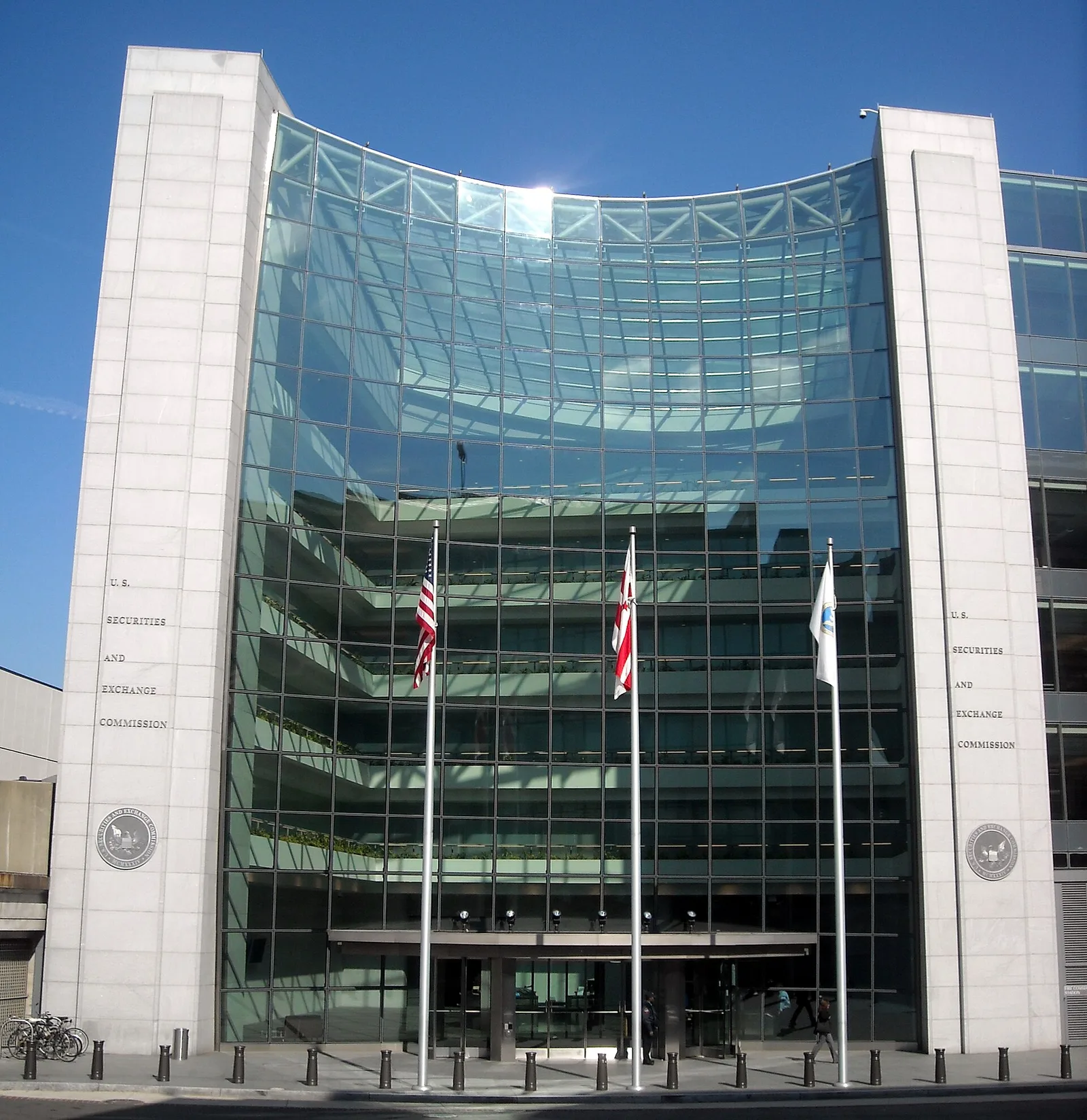
While Europe closed a regulatory cycle with the expiry of the MiCAR transitional periods, the United States is moving in the opposite direction. Within a few days, two long-awaited milestones there fell through.
The Clarity Act stalls at around 51 votes
The Digital Asset Market Clarity Act is meant to establish which US federal agency oversees which category of digital asset and which trading platforms. Before the summer recess it failed to clear the Senate's procedural threshold.
Sixty votes were required. Roughly 51 materialised. Majority Leader John Thune confirmed the postponement to September. Senators return on 14 September 2026; under Senate procedure the first realistic window for another vote falls on 15 or 16 September.
Where the bill stalled is notable. The House of Representatives and the Senate Banking Committee had already passed it. It is the final step that failed — in American legislative practice, the stage at which measures most often die.
The SEC cancels its meeting
The second delay came from the supervisory side. The Securities and Exchange Commission scrapped its open meeting scheduled for 14 August, at which it intended to introduce the Regulation Crypto Assets framework.
Three components had been expected: tailored exemptions for early-stage crypto projects raising capital, safe-harbor rules for decentralised networks, and targeted disclosure pathways.
The Commission cited a scheduling issue and named no replacement date. The start of formal public consultation is therefore effectively suspended. The release of plans for trading tokenised equities slipped the same day.
The market reaction
Bitcoin slid below 63,000 US dollars on 14 August. The decline cannot be explained by regulation alone: US equity indices also weakened following soft consumer confidence data and retail sales below expectations.
The regulatory component is visible in individual names, however. Coinbase and Robinhood, both exposed to real-world asset tokenisation, closed lower.
Fund flows flipped within days. In the week to 7 August, US spot Bitcoin ETFs took in roughly 853.5 million US dollars — the strongest weekly figure since April, with about 693 million of it in BlackRock's IBIT. Days later flows turned negative, with roughly 131 million US dollars of outflows in a single trading session.
Context matters: on a year-to-date basis the Bitcoin ETF category remains in net outflow despite the early-August recovery, following a difficult first half of 2026. The accurate reading is neither that institutional capital has returned nor that it has withdrawn, but that the picture is mixed.
Other developments of the week
Quieter, but more structural:
Bank Leumi, Israel's largest credit institution, announced a partnership with Galaxy Digital for direct digital-asset services. Launch is planned for early 2027, with Bitcoin, Ethereum and Solana tradable directly in the bank's app and on its trading platform. Execution runs through Galaxy's institutional infrastructure, custody through the technology acquired with GK8. It is the first major Israeli bank to offer native trading without third-party wrapper products.
KPMG US completed a full financial audit of Tether for the financial year ended 31 December 2025 and issued an unqualified opinion. For an issuer that worked for years with limited attestations rather than full audits, this is a non-trivial event.
Discussion also continues on the possible exclusion of companies with predominantly crypto-weighted balance sheets from MSCI indices. Index providers are reassessing how to treat operationally inactive companies holding large Bitcoin reserves.
What to watch through September
Three dates and one theme.
15 and 16 September is the first concrete window for the Clarity Act to return to the floor. A second failure would push the measure beyond the autumn session, with all the complications of the American political calendar.
The SEC's calendar remains open. There is no replacement date for the Regulation Crypto Assets framework, and until there is, public consultation does not begin.
The genuinely interesting theme for investors in Germany, however, sits beneath the individual dates: since July 2026 Europe has had a completed and operational legal framework; the United States has not. A divergence in this direction has not occurred in the past decade. Over coming quarters it is likely to influence where platforms choose to domicile and which products they bring to market first.
Descriptions of market movements refer to past conditions and are not forecasts. This article is not investment advice.